Gitar Band Hero
- 3.6
- Rating
- 1.00M
- Installs
- Free
- Price

 Analysis by App-foxy
I approached Gitar Band Hero as a quick music game rather than a serious guitar-learning tool, and that distinction matters from the first tap. Developed by Bz Dev, this free Android game turns the familiar idea of matching guitar-style notes into a compact way to pass a few minutes. Its central appeal is simple: you interact with music through timing and rhythm instead of merely listening to a track.
That focused idea gives the game an immediate advantage. I did not need to study a complicated menu or understand a long tutorial before trying it. At the same time, the uncomplicated design also explains why the experience may feel limited for players looking for deep progression, realistic guitar practice, or a large competitive system. I found it most enjoyable when I treated it as a short, casual session with a musical theme.
Why the guitar-note timing is the real experience
The most important capability here is the way the game asks you to respond to music through timed interaction. It is not trying to replace a guitar, teach chord shapes, or reproduce the full process of playing an instrument. Instead, it gives you a game-like version of performing along with a song, where attention, rhythm, and quick reactions matter more than technical musical knowledge.
You May Also Like

 Blood Strike: 2.5 Anniversary
Blood Strike’s Loadouts Turn Every Drop Into a Tactical Gamble
A close look at Blood Strike’s custom loadouts: how fast access to signature weapons reshapes its battle royale rhythm, rewards preparation, and narrows the gap between fights.

 Pandora - Music & Podcasts
Pandora’s Music Is Easy to Start, but Harder to Recover
Pandora’s strength is its low-effort path from a seed to a station. Its weak spot is how much confidence it asks you to place in connection, setup, and quiet recovery.

 8 Ball Pool
 Is Built on Rivalries, Rematches, and Routine
A close look at the rivalries, rematches, shared routines, and unanswered safety questions that turn a quick pool match into a persistent mobile community.

 Samsung Music
’s Quiet Strength Is Playing What You Already Own
Its reach comes less from spectacle than from dependable access to a personal library. That simplicity is both the app’s strongest retention engine and its ceiling.

 AccuWeather: Weather Radar
AccuWeather Review: A Quick, Clear Forecast for Everyday Decisions
For everyday plans, the best forecast is the one you can understand quickly. AccuWeather makes rain timing, radar, and local conditions easy to act on, with a few trade-offs.

 Hill Climb Racing
Why Hill Climb Racing Still Turns Crashes Into One More Run
A tiny car, a bumpy hill and one more upgrade: Hill Climb Racing keeps resurfacing because its simple chaos makes every near-miss feel personal.
More From Our News Desk



That makes the game approachable for people who enjoy rhythm titles but do not want a demanding music curriculum. You can pick it up with no previous guitar experience. The useful skill is not knowing where to place your fingers on a real fretboard; it is recognizing the flow of the notes and reacting consistently. I think that separation is one of its clearest strengths because it removes the intimidation that often comes with music-related apps.
There is also a subtle difference between tapping randomly and actually following the musical timing. If I watched the pattern carefully and anticipated what was coming next, the session felt much more satisfying than simply pressing whenever something appeared. That is the main reason I would recommend using headphones when possible: not because the game becomes a lesson, but because hearing the rhythm can make the timing easier to understand and the performance more engaging.
The store summary presents it as a free guitar band hero game, and that description captures the intended mood without suggesting that it is a full instrument simulator. I would set expectations accordingly. Someone wanting to learn scales, tune a guitar, or practice recognizable chords should choose a dedicated learning app instead. Someone wanting a lightweight musical challenge can understand the purpose quickly.
How the core interaction feels during an ordinary session
In practice, I found the game works best when I play in short bursts. The interaction is easy to understand, but maintaining concentration through a sequence of notes still gives the session a small sense of pressure. A missed input can interrupt the feeling of performing, while a clean run creates the pleasant illusion that I am keeping up with a guitar part.
That illusion is the key effect of the capability. The game does not make me a better guitarist in a direct, technical sense, but it does make me listen more actively. Instead of leaving music in the background, I start noticing its pulse and anticipating changes. For a casual player, that is enough to turn a passive break into something interactive.
I recommend beginning with a relaxed grip and keeping the phone stable on a table if the screen feels crowded in your hands. This is a small practical adjustment, but it helps separate the visual task from the physical awkwardness of holding a device. It also makes it easier to concentrate on timing rather than accidentally shifting the phone while playing.
Another useful habit is to avoid chasing every note immediately after a mistake. I got better results by returning my attention to the next beat instead of trying to compensate for the previous miss. That approach is especially helpful in rhythm games because frustration can cause a second error more quickly than the original one. The game rewards calm observation more than frantic tapping.
For younger players, the Everyone content rating makes the concept easy to consider in a family setting. Still, I would treat it as entertainment rather than an educational guitar product. A child may develop a better sense of following a beat, but the game should not be presented as a substitute for lessons or supervised instrument practice.
A realistic use case: a five-minute music break
The strongest everyday scenario is a short break when I want something more active than scrolling but do not have time for a long game. I can open it, play a brief sequence, and stop without needing to remember a complicated story or manage a large collection. That makes it a natural fit for a commute, a waiting room, or a few minutes between tasks, provided the surroundings allow sound and screen attention.
In that situation, the guitar theme gives the break a clearer identity than a generic reflex game. I am not simply matching shapes or clearing a puzzle board; I am trying to stay with a musical pattern. The difference is small, but it changes how the session feels. I tend to focus more closely and replay a section because I want to improve the timing, not just because I want to fill time.
It can also work as a social icebreaker. Handing the phone to a friend and comparing who can follow the rhythm more cleanly is easy to understand without explaining a complex ruleset. I would not describe it as a full multiplayer experience, since the confirmed details do not establish a dedicated competitive mode, but the basic challenge is still suitable for informal turn-taking.
For a musician, the use case is narrower. A guitarist may enjoy the performance fantasy and use it as a mental warm-up, but the game will not replace finger exercises, metronome work, or learning a song on a real instrument. In fact, a musician who wants measurable practice may find the lack of direct instrumental technique more noticeable than a beginner would.
For someone who usually avoids rhythm games, I would suggest trying it with modest expectations. The guitar presentation may make the genre feel more familiar, but the central demand remains timing. If repeated visual reactions are tiring or if you prefer slow, thoughtful games, the format may not hold your attention for long.
Where the free model helps and where it can interrupt
The game is free to install, which lowers the barrier to trying it during a spare moment. That matters for this kind of casual title because the main question is whether the interaction suits your taste. You can discover that without committing to a purchase at the outset.
There are in-app purchases priced at $0.99 per item. I see that as a relatively approachable structure for a player who wants to spend a small amount, but I would still make the decision based on whether the extra value is meaningful to your own play. A low individual price does not automatically make every optional purchase worthwhile, especially in a game intended for short sessions.
My practical advice is to play enough free content to decide whether the timing loop itself keeps you interested before buying anything. If you enjoy the basic guitar-note interaction, a small optional purchase may feel reasonable. If the core loop already seems repetitive, spending money is unlikely to solve that underlying issue. The purchase model cannot change whether this particular style of play suits you.
The free format also makes the game easier to recommend as a low-risk experiment. It is a sensible download for a person who wants a music-themed game without first choosing between a subscription service, a premium rhythm title, or a dedicated guitar-learning platform. The trade-off is that casual accessibility usually comes with less depth than specialized alternatives.
What the current version means for compatibility
The current version is 13.0.0, and the listed minimum operating system is Android 7.1. That gives the game a useful reach across older Android devices, although actual comfort will still depend on the phone’s screen, responsiveness, and general condition. Rhythm games are particularly sensitive to delayed or awkward input, so an older compatible device may run the app while still making precise play less pleasant.
I would test the first session in a quiet place and pay attention to whether the notes feel synchronized with what I hear. If the visual and audio cues seem out of step, the problem may be the device or environment rather than your ability. Playing with other demanding apps closed can also make the phone feel less distracted, even though I would not treat that as a guaranteed performance fix.
The age rating of Everyone supports its broad accessibility. That does not mean every player will find it equally comfortable. People with sensitivity to fast visual movement or difficulty with repeated screen tapping should approach it cautiously and stop if the interaction becomes tiring. The game’s simplicity is an advantage, but it does not remove the physical demands of concentrating on a moving rhythm pattern.
Where it falls short beside other music games
Compared with a dedicated guitar-learning app, this game is much easier to start but far less useful for building real technique. It does not belong in the same category as lessons that explain chords, finger placement, strumming patterns, or musical theory. If your goal is to play a particular song on an actual guitar, a learning-focused alternative is the better choice from the beginning.
Compared with a larger rhythm game, its appeal is more immediate and less dependent on a broad progression system. Players who want extensive song libraries, character development, online rankings, or long-term collecting may find the experience too compact. I would choose a more elaborate rhythm title when I want a game to occupy weeks of attention rather than provide a quick musical diversion.
Its advantage over those alternatives is the low commitment. I do not need to own an instrument, schedule practice time, or learn a complicated interface. The guitar theme supplies enough personality to make the basic timing challenge feel distinct, while the free entry makes experimentation simple.
The main friction is repetition. Once the novelty of playing a guitar-themed rhythm game fades, the experience depends heavily on whether the note patterns and available content continue to feel rewarding. I would not download it expecting the variety of a major music platform or the depth of a full console-style band game. Its value is strongest when convenience matters more than scale.
Who will get the most from it
I think Gitar Band Hero is best for casual Android players who like music, want a quick reflex challenge, and enjoy the fantasy of performing without learning an instrument first. It is also a reasonable choice for families looking for an accessible music-themed game, for friends who want a simple turn-taking challenge, and for experienced rhythm players who want something lightweight between larger games.
The audience is already substantial, with over one million installs and an average rating of 3.6 from around ten thousand ratings. Those figures suggest that the concept has found a real casual audience, while the middling score is a useful reminder not to expect universal appeal. I read it as a game people can understand quickly, but not necessarily one that satisfies every player looking for long-term depth.
I would skip it if your priority is serious guitar education, a highly competitive online scene, or a huge catalogue of advanced music challenges. I would also look elsewhere if you dislike repetition or need extensive customization before a game feels personal. A metronome, lesson app, or more feature-rich rhythm game would serve those needs better.
For everyone else, the decision is straightforward: try it when you want a free, approachable musical game, and judge it by how much you enjoy following the timing rather than by whether it teaches guitar. The developer, Bz Dev, has built the experience around a clear central idea, and that clarity is both its strongest quality and its biggest limitation.
My final view is positive but measured. I like the way the guitar-note interaction turns a few spare minutes into an active listening exercise, and I appreciate that the game does not demand musical knowledge before letting me play. I would recommend it to a friend who wants a small music game, especially if that friend values quick access over deep progression. The best reason to install it is the focused rhythm loop, not the promise of becoming a guitarist.
FAQs for Gitar Band Hero
01What is Gitar Band Hero, and how does the game work?
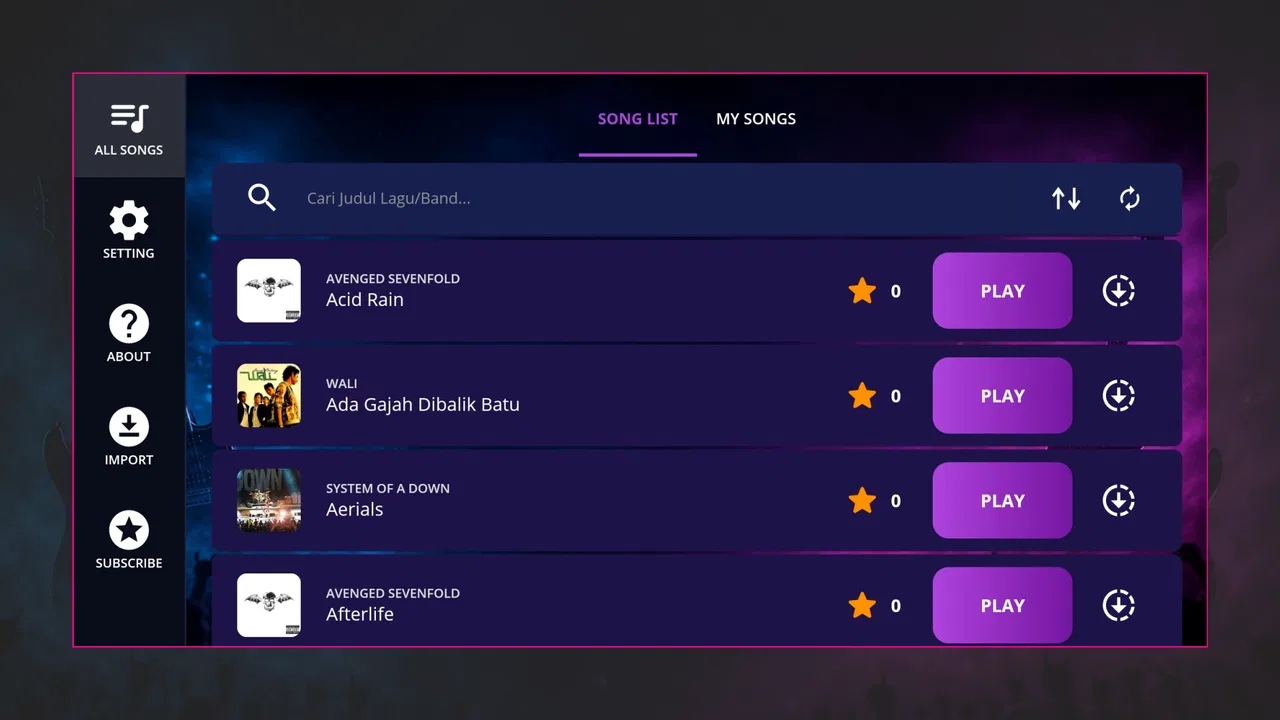
Gitar Band Hero is a music-focused rhythm game in which you play songs by tapping, holding, or following notes as they move across the screen. The main objective is to keep your timing accurate, build combos, and complete tracks with the highest possible score. It is designed to give players a guitar-performance experience using touchscreen controls rather than a physical instrument.
02Can I play Gitar Band Hero without an internet connection?
Whether Gitar Band Hero works fully offline may depend on the version installed and the feature you want to use. Basic gameplay may be available without a constant connection, but advertisements, updates, account functions, leaderboards, or additional song content can require internet access. It is worth opening the game once while connected and checking which tracks and modes remain available offline.
03Is Gitar Band Hero suitable for beginners?
Yes, the game can be approachable for beginners because its core controls are based on simple taps and timing rather than real guitar technique. New players can usually start on easier difficulty levels and gradually improve their accuracy, rhythm, and reaction speed. However, faster songs and advanced note patterns become challenging, so patience is needed before achieving consistently high scores.
04Does Gitar Band Hero include in-app purchases or advertisements?
Gitar Band Hero may include advertising or optional purchases, depending on the platform, region, and current version of the app. These can potentially unlock content, remove advertisements, provide virtual items, or speed up progression. Before downloading, review the store listing and purchase information carefully, especially if children will use the device, and check whether parental purchase restrictions are available.
05What devices and permissions are required to play Gitar Band Hero?
The exact requirements depend on whether you install the Android or iOS version, as well as the release currently available in your region. A reasonably modern device with enough free storage should provide a smoother experience, particularly during music playback and visual effects. The game may request permissions related to network access, notifications, or device storage, so review them before accepting.
Pros
- Easy-to-learn controls for casual players
- Supports quick sessions whenever you have a few minutes
- Fun rhythm gameplay with a familiar band theme
- Responsive note timing when played on compatible devices
- Suitable for players who enjoy music-based challenges
Cons
- Song selection may feel limited after extended play
- Some tracks or features may require additional purchases
- Fast sections can be difficult on smaller screens
- Gameplay may become repetitive over longer sessions
- Performance can vary on older Android and iOS devices

Gitar Band Hero
Gallery